UNDERSTORY DORRIGO · UNDERSTORIES · A TALE
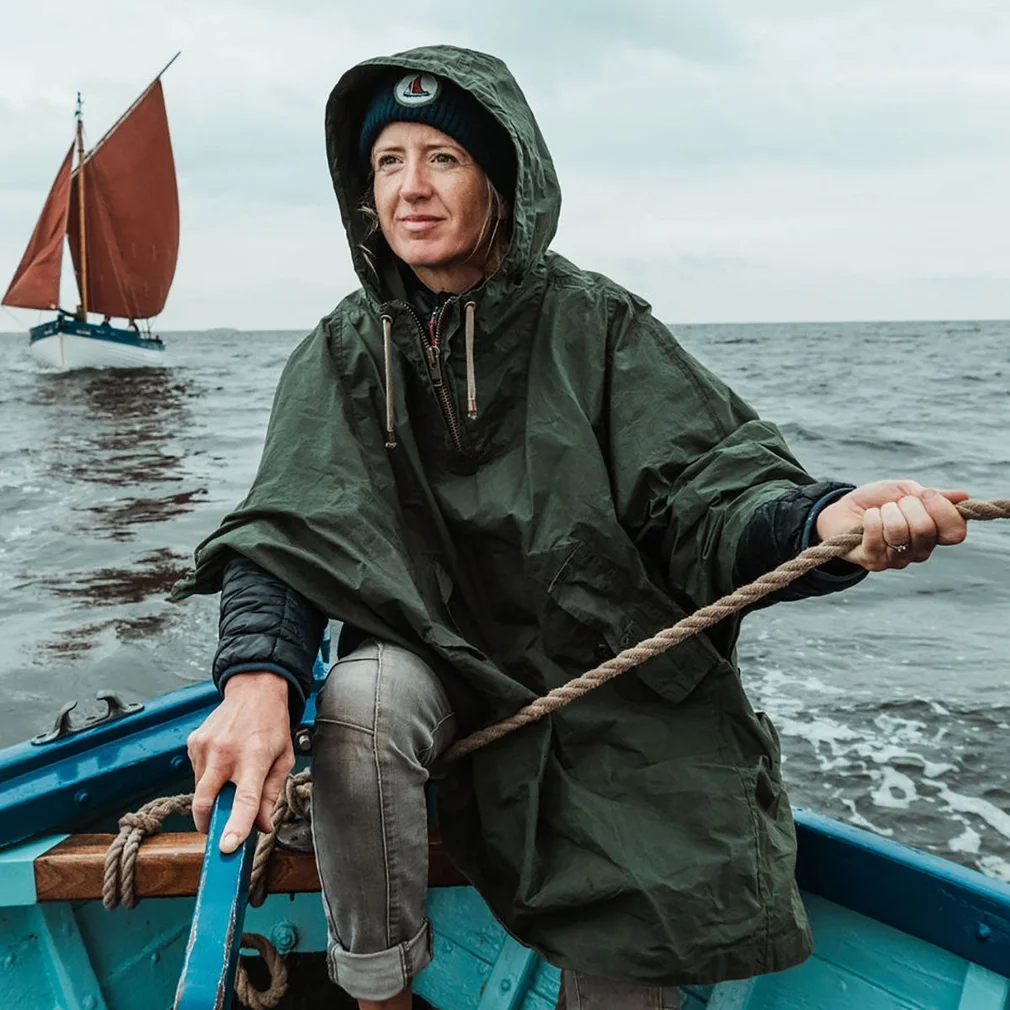
The Sail That Could Not Be Blown Away
A tale, truthfully told — of the Norfolk Sea Cape, made by Yarmouth Oilskins from Dundee wax cloth
✦
I
In times past, upon the cold grey reaches of the North Sea, there sailed fishermen chasing the herring in open wooden boats. The wind was their engine and the weather their master, and a man might be soaked to the bone before the first net was hauled. Their sails were woven of flax; and when the rain came down those sails grew heavy and sodden and slack, so that the boat went sluggish in the water and the crew suffered the elements. It was a hard way to win a living, and a wet one.
II
Now necessity is the mother of every good invention, and so it proved here. The fishermen took to rubbing their sailcloth with fish oil and grease and found that it answered twice over: the oiled sail shed the rain; and being sealed, it hung lighter and firmer, it caught the wind more keenly, so that the little boats ran swifter for it. Five hundred years ago and more, on the east coast of Scotland, this was the very beginning of waxed cloth — born not in any mill, but on the open sea.
III
The fishermen were thrifty men, who wasted nothing. When at last a sail was worn through and good for sailing no longer, they would not cast it away. They cut the spent oiled canvas into capes and wore it across their shoulders to shield them from the wind and the stinging spray. So, the first sea cape of all was a dead sail given a second life — a sheet that had caught the wind, now turned to keep its owner dry. Remember it, for the tale comes around again.
IV
In the centuries that followed, the treatment was bettered by degrees. Rank fish oil which stained the cloth a deep yellow you could see on a fisherman’s clothes gave way to linseed, kinder to the nose. Lighter cotton sails were spun and oiled for the tea clippers and the navy’s ships — among them the Discovery, that bore men to icy lands, and to this day lies in Dundee’s harbour. But linseed grows brittle in time, and yellows, and cracks, and lets the water back in. A better seal was wanted.
V
That seal was found in wax; and the finding of it belongs to Dundee, by the river Tay. In the years when that city was a cloth-capital of the world, busy with jute and with flax off the Baltic ships, there stood a mill — one of the oldest of its kind in all of Britain — that learned to press a paraffin wax into densely woven cotton until the cloth turned weatherproof. In time the kingdom granted it a patent for the waterproofing of cloth. And still, beneath that one roof, the cotton is dyed and finished and waxed together.
VI
It happened that, far to the south on the coast of Norfolk, in the herring town of Great Yarmouth, there has stood since the year eighteen ninety-eight a maker of oilskins. By their own hands they dressed cotton against the weather and clothed the fishing fleets; so brisk was the trade that in one year of the nineteen-fifties the factory turned out two thousand garments in a single week. And among their wares, from the very first, were capes — plain weatherproof coverings for folk who laboured out of doors.
VII
And so, the two old trades met at last. The Yarmouth house took the Dundee wax-cloth — light now, and soft, and breathing, yet a shield still against wind and rain — and made of it a sea cape once more. It is unlined, with studs and a zip of brass, deep pockets behind a buttoned storm-flap, and a hood made from three pieces. It opens flat to a blanket, to sit upon or huddle beneath, and folds away into a cloth bag of its own. It is made still with folk who sail wooden boats and tried by them at sea.
VIII
A garment such as this is not bought to be thrown away. The wax takes the marks and the creases of your own weather and keeps them, so that in time the cape becomes a record of where you have walked; and when at last it tires, you feed it wax afresh and on it goes. The first sea cape was a sail that would not be wasted, and this one keeps that old faith. The rain that drums on our Dorrigo hills is the same rain that fell on the North Sea — and here, too, is a good cloth to turn to, and to keep.
✦